NOTE / 001
The cost you cannot see
Every resource you spend closes one possibility and opens another. Learn to make that exchange visible.
Read the strategy note ↗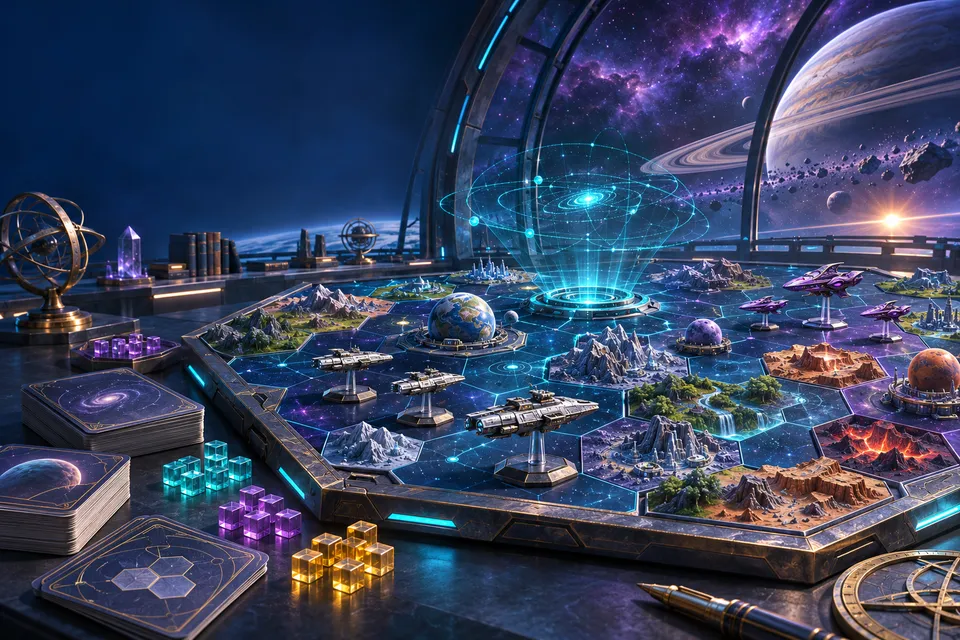
WELCOME TO THE COSMIC INSTITUTE
Cosmoinst explores the craft of science-fiction board games: the plans you make, the information you share and the unexpected turn that changes everything.
Our illustrated worlds are fictional concepts, built to make tabletop mechanisms easier to explore. Use the mission atlas to find a starting point, then try a small rules experiment with the pieces you already own.
01 / MISSION ATLAS
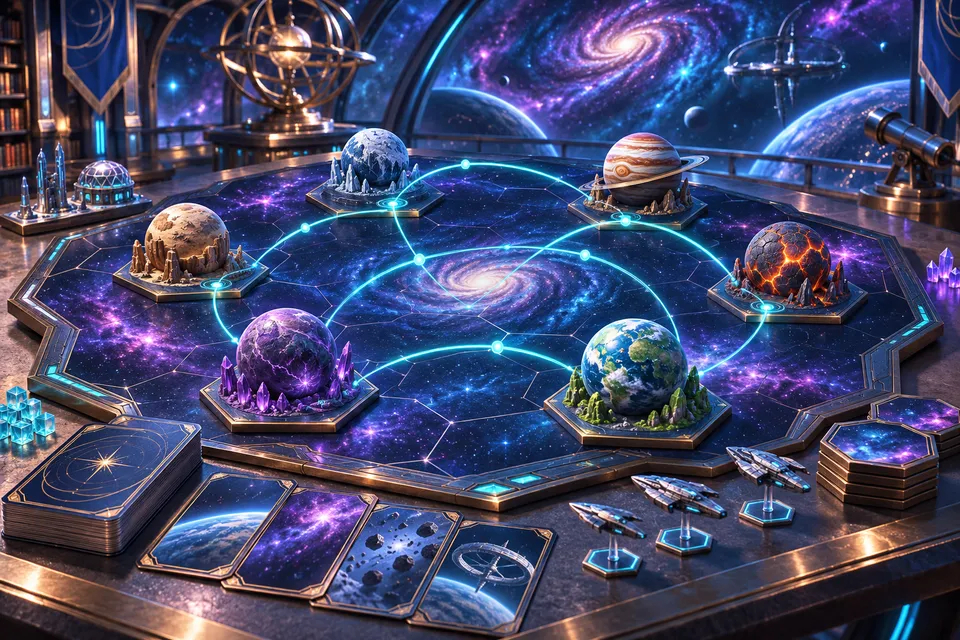
Choose a sector to inspect its objective. Refine the map by complexity and the time you have at the table.
6 missions available
No mission fits these settings. Widen the time window or reset the map.
SELECT A BEACON TO RECEIVE YOUR BRIEFING02 / THE MISSION FILES
03 / FLEET ANATOMY
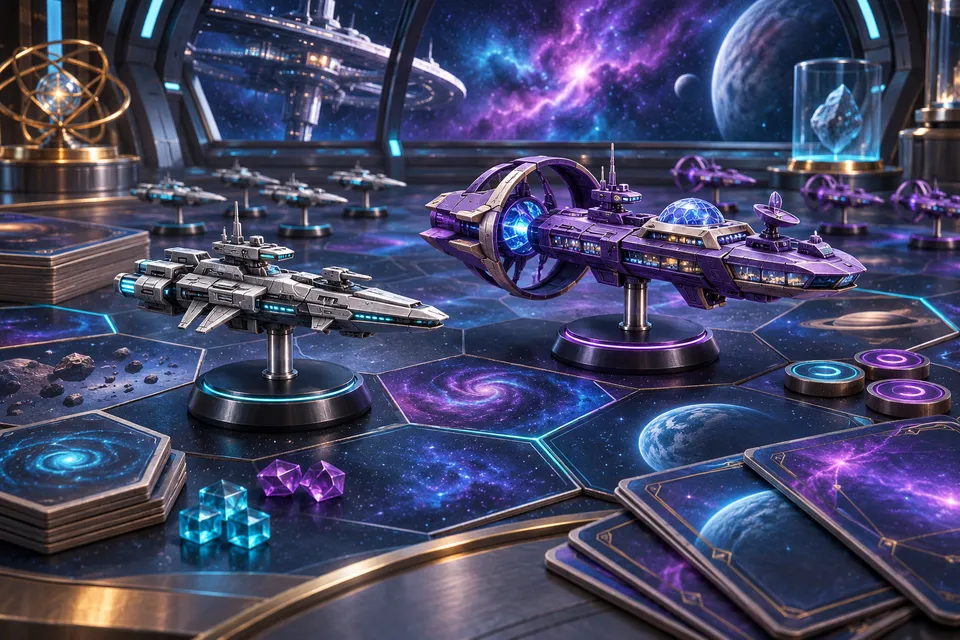
A useful unit gives you a different way to think, not just a bigger number.
A surveyor reveals a route before the fleet commits. It trades immediate progress for better information.
04 / COMMAND SIMULATOR
A small, deterministic tabletop exercise. Allocate all eight energy tokens, then test a supply run.
Launch needs 3 fuel. A complete survey needs 3 research. The asteroid belt requires 2 shield. Try a trade-off, inspect the consequence, then revise your plan.
Read the reasoning behind the exercise ↗05 / THE LONG GAME
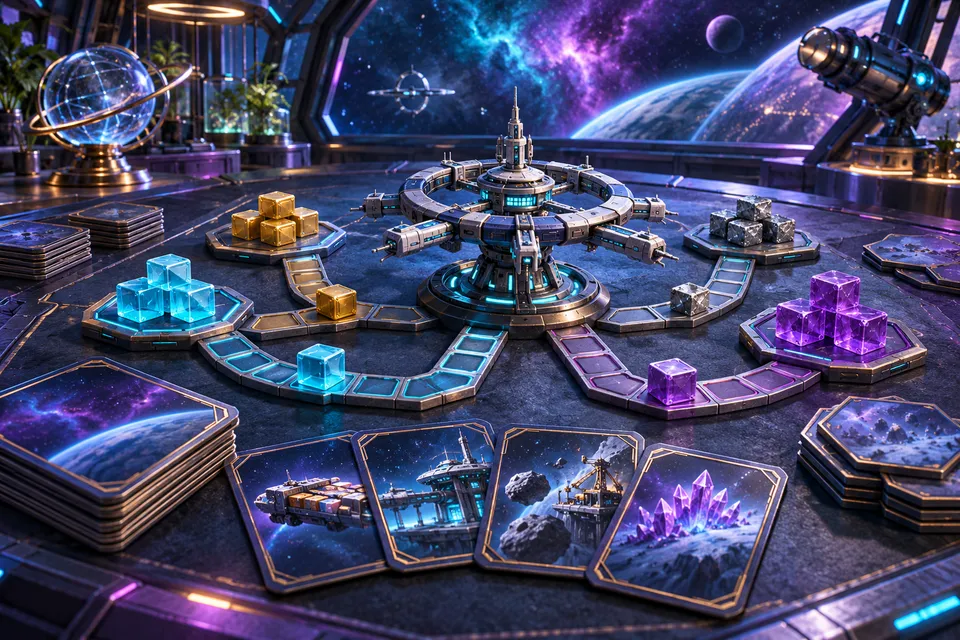
Resources are more interesting when they can do two things. A spare cube might repair a relay now, or fund a longer route next round. The question is not simply “can I afford it?” but “what will I give up?”
06 / MECHANISM OBSERVATORY
Switch the lens. Each mechanism creates a different relationship between what you know and what you choose.
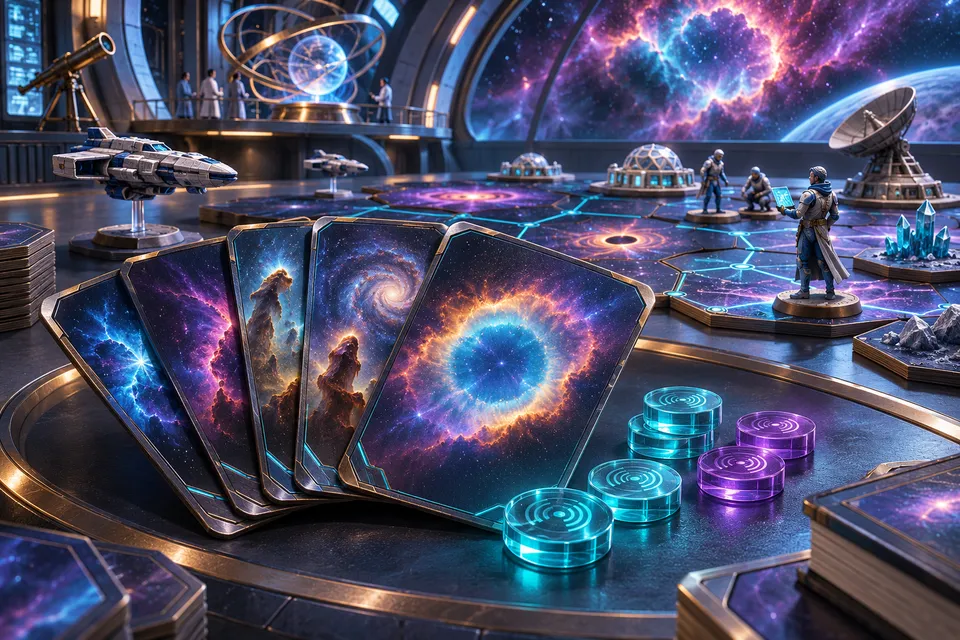
THE DESIGN LENS
Face-down cards let you commit to a sequence while leaving room for a surprise. Keep the possible outcomes explainable: uncertainty is engaging when players can make an informed choice.
Take this to the table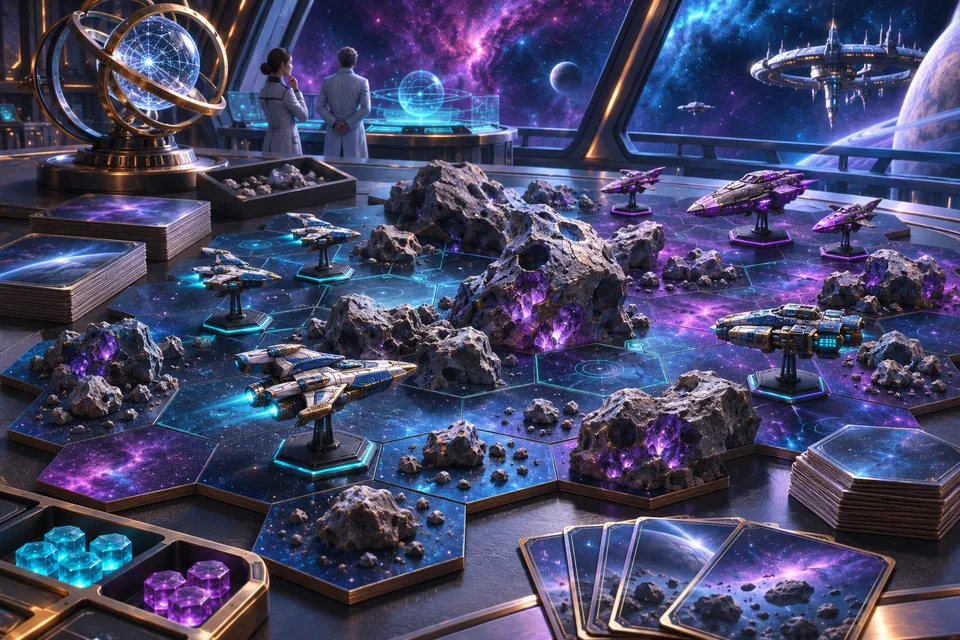
THE DESIGN LENS
A narrow crossing makes position matter. Before adding combat, ask whether a route, a blocking asteroid or a limited movement allowance already creates an interesting decision.
Take this to the table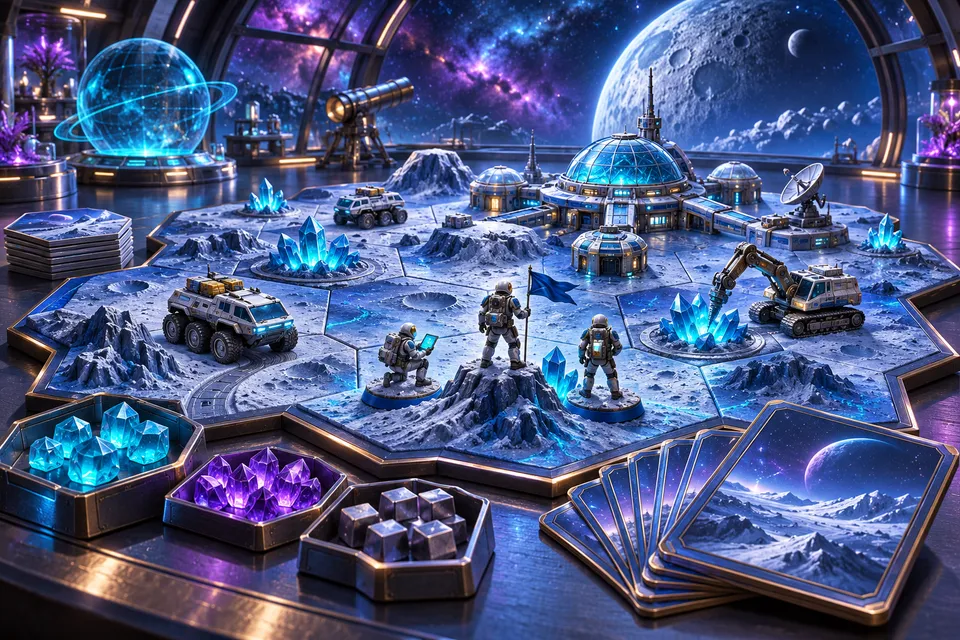
THE DESIGN LENS
A common energy pool can create a genuine discussion. Give every participant a distinct responsibility and let the active player make the final call on their own turn.
Take this to the table07 / VESPER CROSSING
A moving asteroid belt turns a static map into a planning problem. Use an escort to make a direct crossing, or let a surveyor reveal a safer approach. Both routes should have a reason to exist.
Inspect Vesper Crossing08 / NIVALIS STATION
Connect the relays. Protect the weakest link. On this moon, a clever network matters more than a spectacular single move.
“Can we afford to wait?” is often a better question than “What gives me the most?”
A design prompt from our fictional Nivalis scenario.
Read the station brief09 / ORION ACCORD
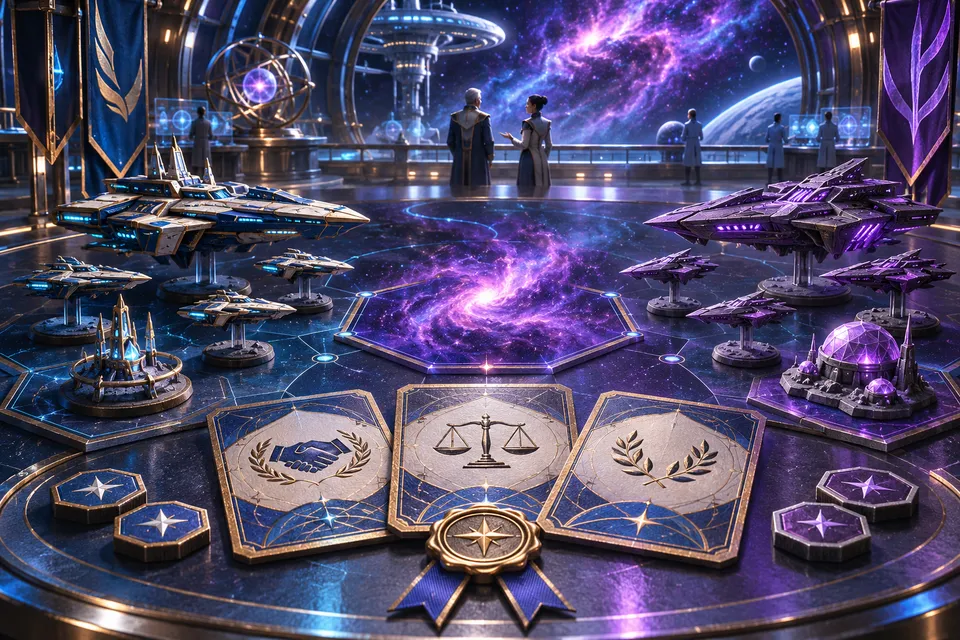
Agree on what changes, who benefits and when the promise expires. Keep negotiation inside the game; nobody should have to defend a personal boundary to enjoy a turn.
Open the accord ↗10 / FIRST COMMAND
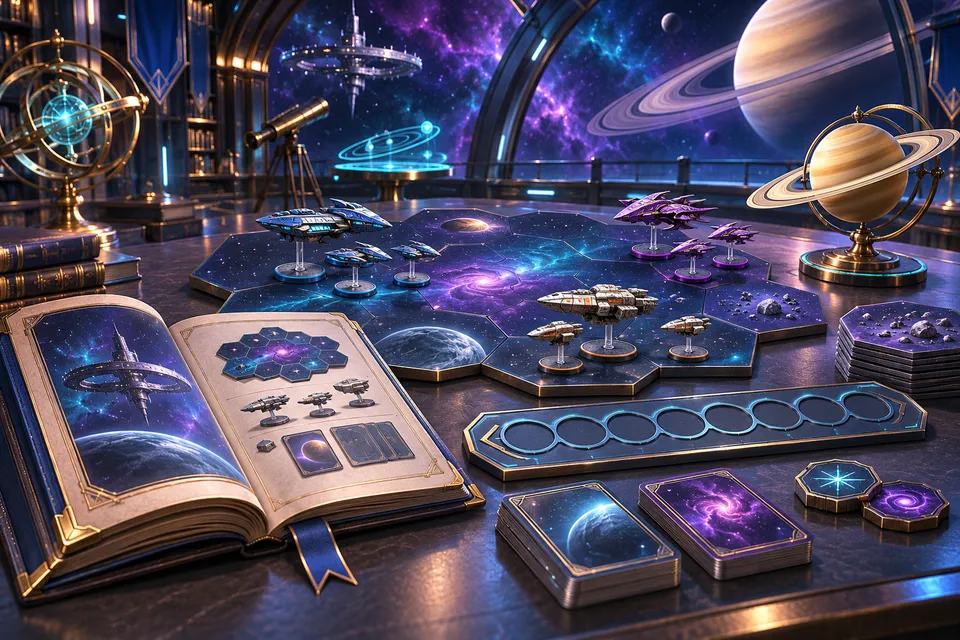
Show what completing the mission looks like before naming every component.
Move a ship, pay its cost and describe the change on the board.
Let the new player decide. Keep advice available without taking over.
11 / PRE-LAUNCH CHECK
This checklist stays in this browser when you change it. It is never sent with your contact message.
0 of 5 launch checks complete
12 / AFTER THE LAST TURN
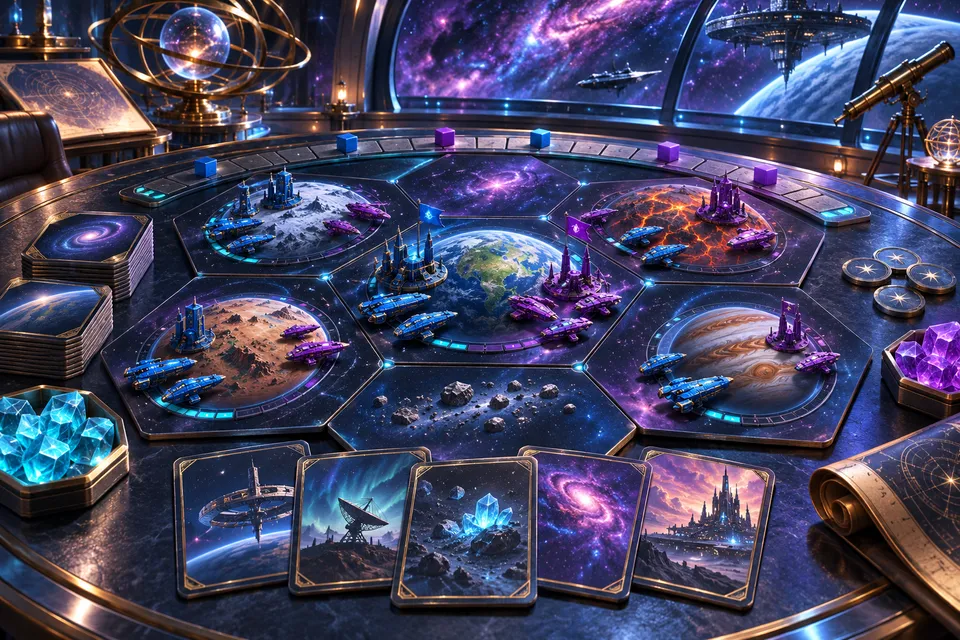
A good debrief does not need a winner’s lecture. Ask which choice surprised the table, where the rules slowed the group down and what each player would try differently.
Notice Which decision changed the direction of the game?
Explain What information did you wish you had earlier?
Adjust What single change would improve the next session?
13 / RESEARCH NOTES
Every resource you spend closes one possibility and opens another. Learn to make that exchange visible.
Read the strategy note ↗Distance becomes interesting when a safe detour and a risky shortcut both make sense.
Study the route design ↗A teaching sequence that starts with the goal can give a new player a useful mental model.
Read the field lesson ↗14 / OPEN QUESTIONS
15 / OPEN A CHANNEL
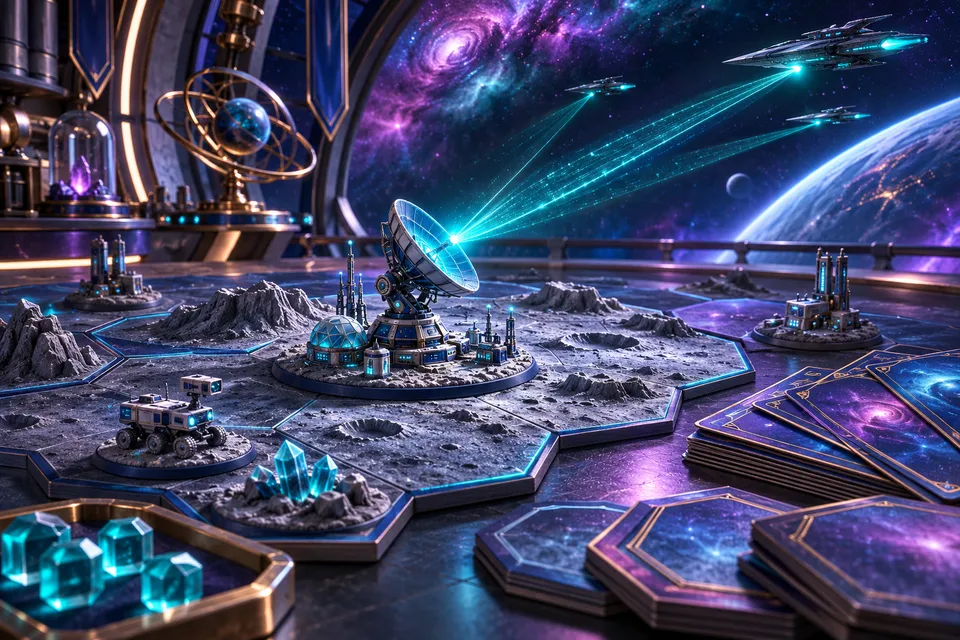
Found an unclear rule? Have an accessibility suggestion? Send a specific observation and help make the next explanation better.
Contact the institute[email protected]