FIELD GUIDE / FIRST CONTACT
Bring the universe
to the table.
A practical sequence for introducing a fictional mission to real people. Start with common pieces, clear expectations and permission to ask questions.
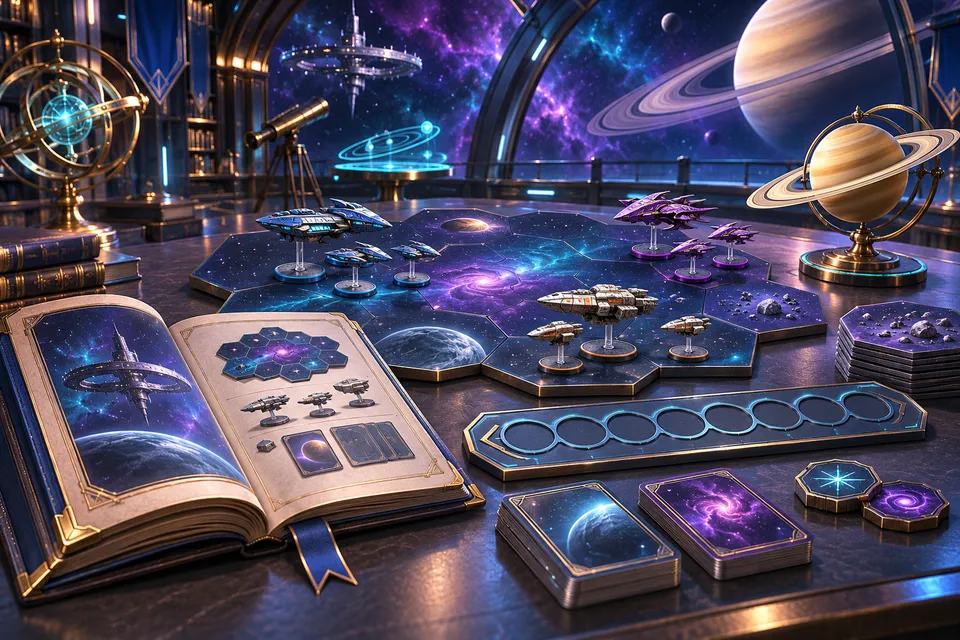
Show the ending before the beginning.
Point to the three beacons that complete Lyra Relay. Place one marker on a finished beacon so everyone can recognise success. Then explain the two actions that move the group toward that state.
A list of component names is hard to remember without a purpose. Introduce fuel when a ship needs to move, and introduce a signal when the ship reaches its first beacon.
Build a small, readable prototype.
Draw five connected circles on paper. Use coins as ships and different-shaped counters as resources. Labels matter more than elaborate artwork during a first rules experiment.
Keep a written turn reminder near the board. Use shape and wording as well as colour, and leave enough space for everyone to reach a piece comfortably.
Play one round with the plan spoken aloud.
Let each player describe an intended move before spending resources. Check the rule together, then resolve the action. This is a learning round, so rewind a misunderstanding without penalty.
When the group is ready, stop narrating every possibility. Keep help available and let the active player own their choice.
Make an ending the group can reach.
Agree on a time window before starting. A shorter mission with a clear final round can feel more satisfying than an ambitious campaign that runs past everyone’s energy.
If a player needs a break, pause. These concepts exist to support a shared experience; finishing a scenario is optional.
A useful debrief takes three questions.
- Which decision felt meaningful?
- Where did the explanation become unclear?
- What single adjustment should the next group try?
Record observations about the rules rather than judgements about a person’s ability.
Use the launch checklist